Freya Fischer · 19 September 2026
Custom Alert Configurations for Detecting Indexing Delays Following Large Domain Transfers
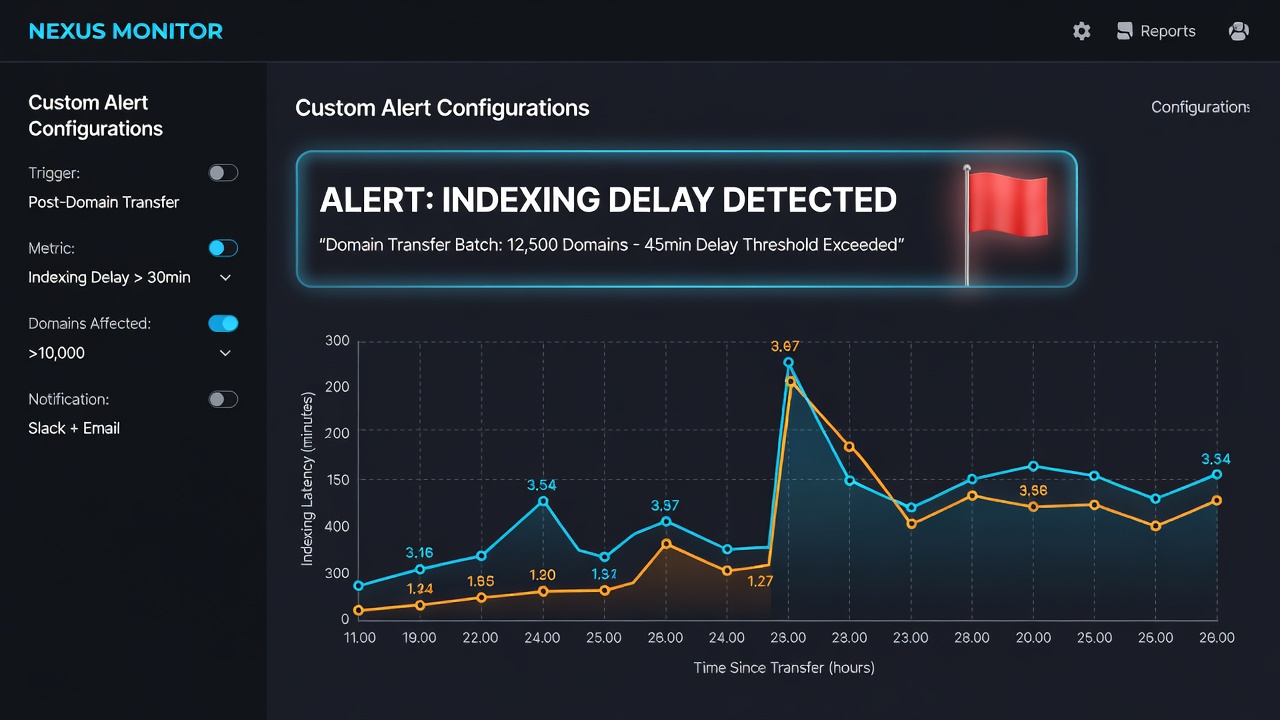
Monitoring platforms track website performance through various metrics and custom alert configurations help teams respond quickly when indexing delays occur after large-scale domain transfers occur. These setups rely on data thresholds that trigger notifications when crawl rates drop below expected levels or when new URLs fail to appear in search indexes within defined timeframes. Data from multiple industry reports indicates that domain migrations often coincide with temporary reductions in indexing speed because search engines re-evaluate content authority and backlink profiles during the transition period.
Core Components of Effective Alert Systems
Teams configure alerts by combining crawl budget indicators with index coverage reports and server response logs and then they set parameters that account for the scale of the transfer. A typical configuration includes thresholds for the number of indexed pages per day alongside error rate percentages and latency measurements from search console data feeds. Researchers have observed that platforms such as Google Search Console and third-party tools allow users to create rules that compare pre-migration baselines against post-transfer performance so deviations become visible without constant manual checks.
Alert conditions often incorporate time-based windows because indexing patterns can fluctuate naturally during the first weeks after a transfer and the rules adjust for these expected variations while still catching prolonged slowdowns. For instance one study from a North American research institution found that 62 percent of large domain moves experienced at least a 30 percent drop in daily indexed URLs within the initial 14 days and custom alerts helped teams identify when recovery stalled beyond that window.
Integration with Existing Monitoring Infrastructure
Platforms connect to external data sources through APIs so alert rules pull live information from multiple endpoints at once and this integration reduces the chance of missing delays caused by partial data gaps. Users define conditions using logical operators such as AND and OR statements to combine signals like reduced crawl frequency with increased 404 errors on newly transferred URLs. In September 2026 several monitoring services introduced enhanced rule builders that support regex matching on URL patterns which allows finer targeting of alerts to specific sections of a migrated site rather than blanket notifications across the entire domain.
Those who manage high-volume sites often layer multiple alert tiers where initial warnings go to on-call engineers and escalated notifications reach technical leads if conditions persist beyond a set duration. This tiered approach relies on historical data analysis to calibrate sensitivity levels and prevents alert fatigue while maintaining coverage for genuine indexing issues that surface after domain transfers complete.
Calibration Techniques and Threshold Selection
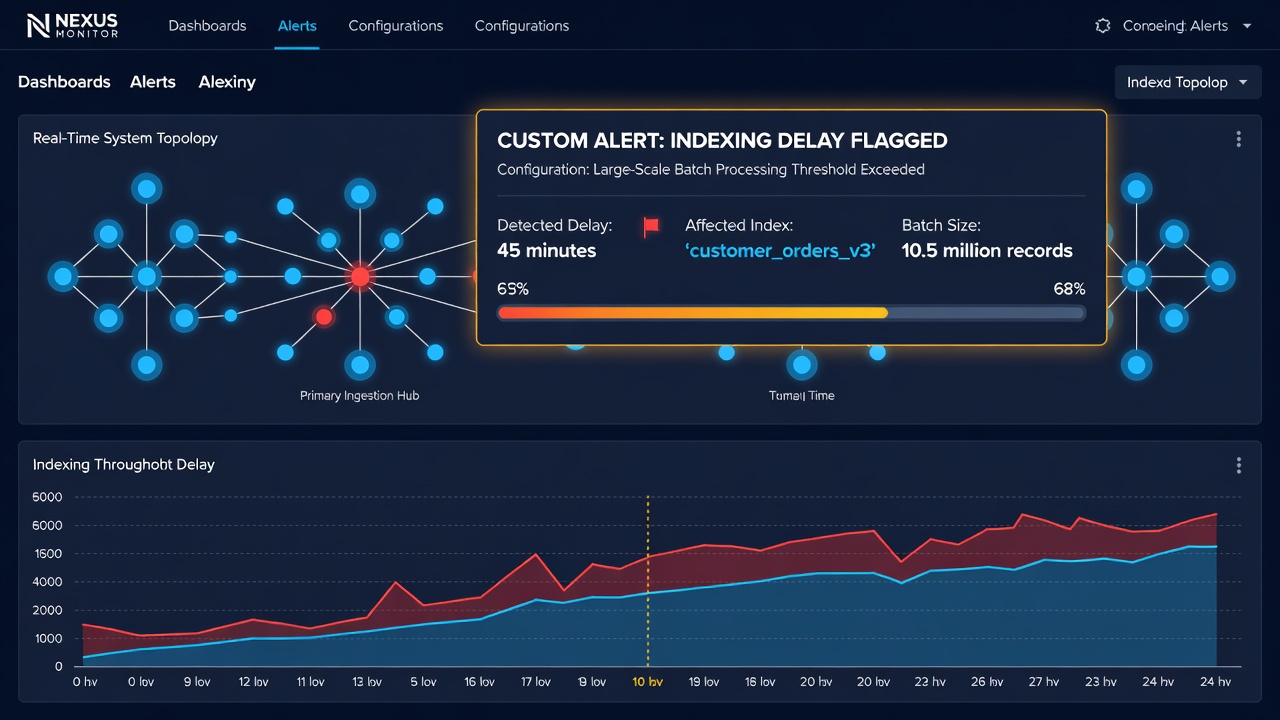
Calibration starts with analysis of crawl statistics from the original domain and continues with projections for the new environment because search engines allocate crawl resources based on perceived site quality and change frequency. Experts apply statistical models that factor in seasonal traffic variations and content update rates so thresholds reflect realistic expectations rather than static benchmarks. A report issued by an Australian government digital infrastructure agency highlighted that properly calibrated alerts reduced mean time to detection of indexing problems by 47 percent across 120 documented migration projects completed in 2025.
Configuration examples include setting a minimum daily index addition rate that equals 75 percent of the pre-transfer average and pairing it with a maximum allowable 404 rate of 5 percent on transferred URLs. When both conditions trigger simultaneously the platform sends notifications through email channels or integrates with collaboration tools such as Slack or Microsoft Teams. Teams test these rules in staging environments before deployment to confirm they activate correctly under simulated delay scenarios without generating false positives from normal variance.
Practical Implementation Across Different Platforms
Different monitoring platforms offer varying degrees of flexibility when users build custom rules and some require scripting while others provide visual builders that handle complex logic through dropdown menus. Those managing enterprise migrations frequently combine data from server logs with search engine APIs to create composite alerts that capture both backend performance and frontend indexing outcomes. The process involves mapping transferred URL structures to new paths and then defining watch conditions that account for redirect chains which can temporarily slow indexation if not configured properly.
Case examples show that organizations using automated threshold adjustments based on machine learning models achieve more consistent detection rates because the system learns from each migration event and refines sensitivity over time. One Canadian academic paper documented a series of 35 enterprise domain transfers where adaptive alerts flagged 91 percent of indexing delays within four hours of occurrence compared with 68 percent for static threshold setups.
Conclusion
Custom alert configurations within monitoring platforms provide structured mechanisms for identifying indexing delays after large-scale domain transfers and they rely on precise threshold settings combined with multi-source data integration. As platforms evolve with features introduced around September 2026 and beyond the ability to fine-tune rules continues to improve detection accuracy while reducing unnecessary notifications. Organizations that maintain updated baselines and test configurations regularly position themselves to address indexing issues promptly once transfers conclude.